
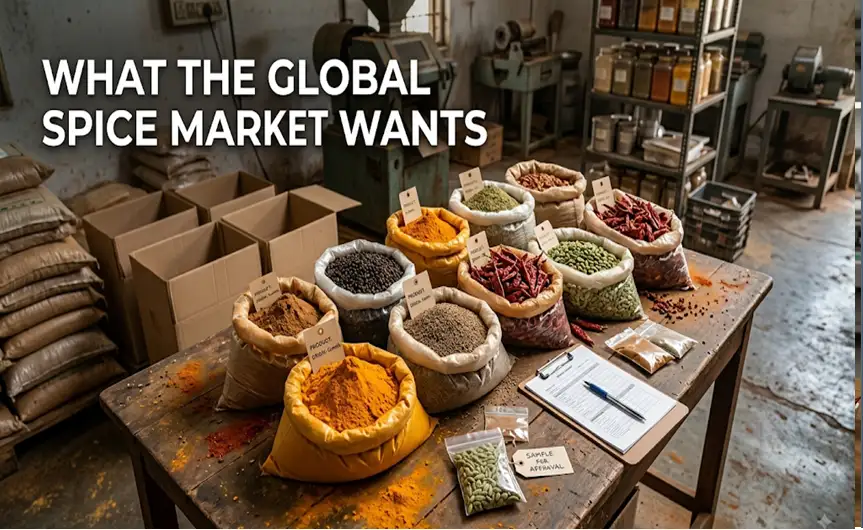
For an importer, choosing the right spice is not only a matter of personal preference. The product must match customer demand, local regulations, storage conditions, pricing, and the type of competition already present in the market.
India offers a large selection of whole spices, powders, blends, oils, and oleoresins. Some products sell in high volumes, while others offer better opportunities for premium positioning.
According to Spices Board trade data, chilli, cumin, spice oils and oleoresins, small cardamom, mint products, turmeric, curry powders, ginger, pepper, and coriander were among the leading contributors to India’s spice export earnings during 2025–26.[indianspices]
Here are the products international buyers should study before choosing their import range.
Dried red chilli is one of India’s most important spice export products. It is purchased in whole, crushed, flake, and powdered forms.
Importers typically supply chilli to:
The main commercial challenge is that chilli quality can vary significantly. Buyers should specify:
If you plan to import chilli powder, laboratory testing and adulteration control deserve special attention. Your supplier should be able to explain the product specifications and provide relevant reports.
Cumin is widely used in Indian, Middle Eastern, African, and Latin American cooking. It is available as whole seeds, crushed cumin, and powder.
It may be suitable for:
When buying cumin, buyers often compare seed size, aroma, purity, moisture, colour, and oil content. Whole cumin can be easier to inspect visually, while powdered cumin may require more detailed testing.
A buyer should also consider whether the target market prefers a strong, earthy flavour or a milder profile.
Turmeric is imported as whole fingers, sliced turmeric, powder, and extracts. It is used in cooking, spice blends, beverages, wellness products, and food manufacturing.
For turmeric powder, curcumin content is often an important specification. However, the correct requirement depends on the intended use and price segment.
Importers should clarify:
Turmeric may offer opportunities for both mainstream grocery products and premium wellness-focused brands, but the packaging and claims must comply with the destination market’s rules.
Cardamom is a higher-value spice used in beverages, desserts, bakery products, confectionery, traditional cuisine, and premium spice mixes.
Small cardamom is particularly valued for its aroma and appearance. Buyers may evaluate:
Cardamom pricing can be more sensitive to crop conditions and availability than many common spices. Importers should therefore confirm the grade, harvest details, price validity, and shipment schedule before placing an order.
Black pepper remains a familiar product in retail, food service, meat processing, sauces, and seasoning blends.
It can be supplied as:
Buyers should mention the desired size, density, origin preference, moisture, cleanliness, and packaging. For a retail brand, peppercorn appearance and aroma can strongly influence customer perception.
Curry powders and masalas provide more branding opportunity than basic single spices. An importer can create a product range for a particular cuisine, region, cooking style, or customer group.
Examples include:
These products are suitable for private-label brands because the importer can differentiate through flavour, packaging, recipe suggestions, and positioning.
The key challenge is consistency. A blend must taste similar in every production batch. Approve a sample and document its formulation before commercial manufacturing.
Ginger is available in fresh, dried, sliced, and powdered forms. It is used in cooking, tea products, seasoning mixes, sauces, and processed foods.
Coriander is commonly sold as whole seeds or powder. Its aroma, colour, purity, and oil content should be checked before purchase.
Both products may be suitable for importers who want to build a broader essential-spice range rather than depend on one product alone.
A product with high export demand is not automatically the right product for your business. Study your own market before placing an order.
Ask:
For a new importer, starting with two or three products may be more practical than ordering a large mixed range. You can test demand, understand customer feedback, and expand after the first shipments.
Before finalising a purchase, ask the supplier for:
The Spices Board identifies quality evaluation and testing requirements for selected export consignments and destinations, so buyers should verify the current rules for their particular products and markets.[indianspices.org]
Pratap Enterprises can help international buyers explore Indian spice sourcing for wholesale, distribution, food manufacturing, restaurants, and private-label brands.
You can discuss:
Chilli, cumin, turmeric, cardamom, pepper, curry powders, ginger, and coriander are among the important Indian spice export products. Demand varies by country and customer segment.
There is no single answer. Cumin, turmeric, chilli, coriander, and curry blends may be practical starting points, depending on local demand, competition, regulations, and storage facilities.
Yes. Suppliers may offer whole, crushed, powdered, and blended products, subject to availability and MOQ.
Yes. Many buyers use private-label packaging for retail and online sales. Confirm MOQ, label requirements, testing, and packaging costs before production.
Contact Pratap Enterprises through:
The best product for import is the one that combines customer demand, manageable compliance, reliable quality, and workable margins.
If you are planning to source Indian spices for wholesale, food manufacturing, distribution, or private-label sales, contact Pratap Enterprises with your product requirement and destination country.
The best product for import is the one that combines customer demand, manageable compliance, reliable quality, and workable margins.
If you are planning to source Indian spices for wholesale, food manufacturing, distribution, or private-label sales, contact Pratap Enterprises with your product requirement and destination country.
With this thought, we are committed to delivering clean, reliable and authentic spices to homes and businesses worldwide accross the Globe.
© 2026 Pratap Enterprises - All Rights Reserved
© Design and developed by - Injector Technologies